
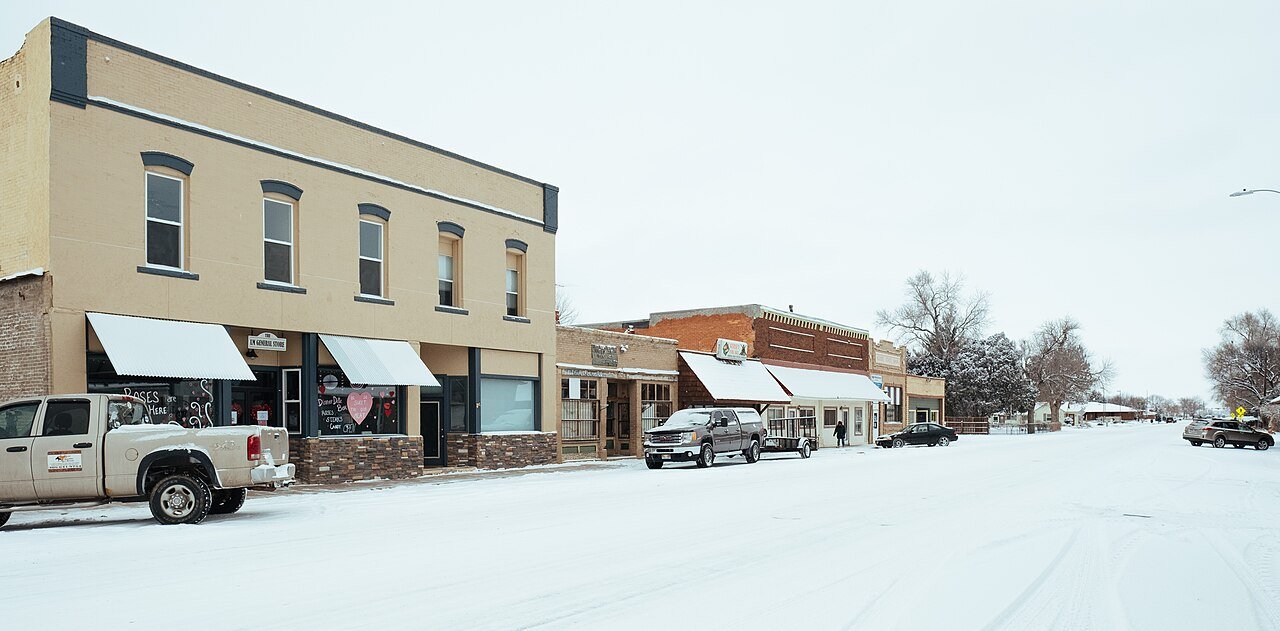
Agricultural and Light Commercial Construction in Kersey
In a town of about 1,500 people, a new building is a decision the whole community notices, and it should be built to last. Kersey sits at 4,623 feet in Weld County, with 1,454 residents in 2010 and 1,495 in 2020, which means the town has held steady while its neighbors have grown. We build for the landowners, small businesses and public bodies who work here, with a focus on durable, plainly detailed buildings that suit the way the land is used.
The setting is a river valley. A trading post, Fort Gerry, was set up on the South Platte River near present-day Kersey in the 1830s, and US 34, which runs about 260 miles across Colorado east of Greeley, crosses the South Platte and has a Weld County junction at County Road 53 in Kersey. River, highway and farmland define the choices a builder makes here: where the frame can sit, how water leaves the site and how a truck gets in and out.
Our approach to Kersey is practical. We look at the ground, talk with the owner about the real use of the building and explain what each choice will cost.
Buildings that suit a working landscape
The most common request is a metal building: a shop, a machine shed, a storage barn or a small warehouse. A clear-span rigid frame building gives the open interior that equipment needs, and it can be erected quickly once the foundation is ready. We help owners settle the width, eave height, door size and insulation level that fit their equipment and their budget.
Small commercial and service buildings are also part of the picture: a feed or supply store, an office for a trade business, or a modest retail space that serves the town. For these we select finishes that stand up to dust and wear, and we keep the mechanical systems simple. A building that is easy for the owner to maintain is worth more than one with complicated systems that need specialists.
A steady town on the US 34 corridor
Kersey has not grown the way some neighboring towns have, and that suggests a different kind of project: a business expanding, a landowner building a shop, a public body replacing a worn-out facility. These are decisions made with care, usually by owners who will use the building themselves. We treat the owner's knowledge of the operation as the most important input.
US 34 runs east from Greeley, and the Greeley and Evans area is where most of the region's larger suppliers are found. Owners who need rail look to Eaton instead. Materials and subcontractors reach Kersey along US 34, but owners should still plan for lead times on items that come from a distance. We account for that in the schedule instead of hoping for the best.
River-bottom ground and open-site hazards
Sites near a river often have higher groundwater than the surface suggests. We look for it with test pits or borings before excavation, plan dewatering if necessary and shore deep trenches carefully. A trench that looks stable on a dry day can turn dangerous quickly when water arrives, and crews on our sites are trained to stop and reassess if conditions change.
Open rural sites carry other risks, among them wind, lightning, long distances to help and the presence of overhead power lines. We brief the crew on these every morning, set up a clear emergency plan with the nearest responders and keep first aid supplies and communication equipment on site. Safe work is rarely dramatic. It is the result of habits repeated every day.
Drainage, soils and the road in
On flat land near a river, water moves slowly and has few places to go. A parcel needs a drainage plan that handles runoff from the new roof and pavement without sending it onto a neighbor or into a ditch that is not designed for it. We work with a civil engineer on grading and detention, and we are careful about floor elevations so water does not collect at doors.
Access is the other half of the question. Entrances onto county roads and state highways need permits, and heavy equipment needs a surface that will carry it. We lay out the driveway and turning area for the owner's largest vehicle, build the base properly and talk through foundation options with the engineer once soil conditions are known.
Planning around seasons and supply
Agricultural owners have their own calendar, and construction has to fit it. A shop that must be ready before harvest has a firm date that cannot move, and a building to be used in winter must be enclosed before then. We ask owners at the start about the seasonal pressures on their operation and build the schedule backward from the dates that matter.
Material lead times are the other variable. Steel packages, overhead doors and electrical equipment can take weeks or months to arrive, so we place orders as soon as the design is approved and keep track of the status. A short phone call to confirm a delivery date is less costly than an idle crew.
Managing the work that starts with the ground
Much of what determines whether a small building succeeds is done in the first few weeks: grading, utilities, footings and slab. Our superintendent manages these directly with the trade partners, which means the person on the machine understands the plan and the owner's intentions. When a surprise turns up, we can adjust the same day rather than after a series of calls.
We also keep the project's information simple. Owners receive a short weekly update with what was finished, what is next and what decisions are needed from them. For manufacturing clients and processors with more complex needs, we add schedule and cost reports, but the principle is the same: a clear picture, shared often.
Tell us what you need to build
Describe the use, the equipment and the date you need to be working in the building. We will respond with a size, a rough cost and the questions that need answers first.
Questions Owners Ask
How wide a building can we get without interior columns?
Rigid frame metal buildings commonly span wide enough for most shops and storage uses with a clear interior. The exact limits depend on the engineered frame, the snow and wind loads and the building height. We give owners several size options and the cost of each so the choice is based on how equipment will actually move inside.
Is groundwater a concern for a building near the South Platte?
It can be. Sites in river valleys often have shallow groundwater, which affects excavation, footings and slab design. We investigate before pricing, then design foundations and drainage to suit what we find. It is much cheaper to learn about groundwater in a test pit than during construction.
Do we need a permit for a highway or county road entrance?
Almost certainly. US 34 and county roads each have their own access requirements, and a new or changed entrance generally needs approval. We raise this at the start and write the review time into the schedule, so it does not hold up the building.
Can you build a small building quickly?
Often, but the speed depends on the approvals and on how soon the steel package and doors can be delivered. The construction itself can be short once the foundation is cured. We order early and keep the owner informed of lead times.