Rail-Served Industrial and Commercial Construction in Eaton
For an owner who ships by rail, the building is the easy part, and the harder question is whether the site can be tied to a main line at a cost that makes sense. Union Pacific's Eaton Industrial Rail Parks, North and South, total 160 acres zoned I-2, with parcels divisible to a one-acre minimum, unit train and manifest service available, and a 10 percent design for new rail service subject to the railroad's approval. We build the warehouses, light industrial shops and yards that sit beside that track, and we plan them with the rail connection in mind from the first drawing.
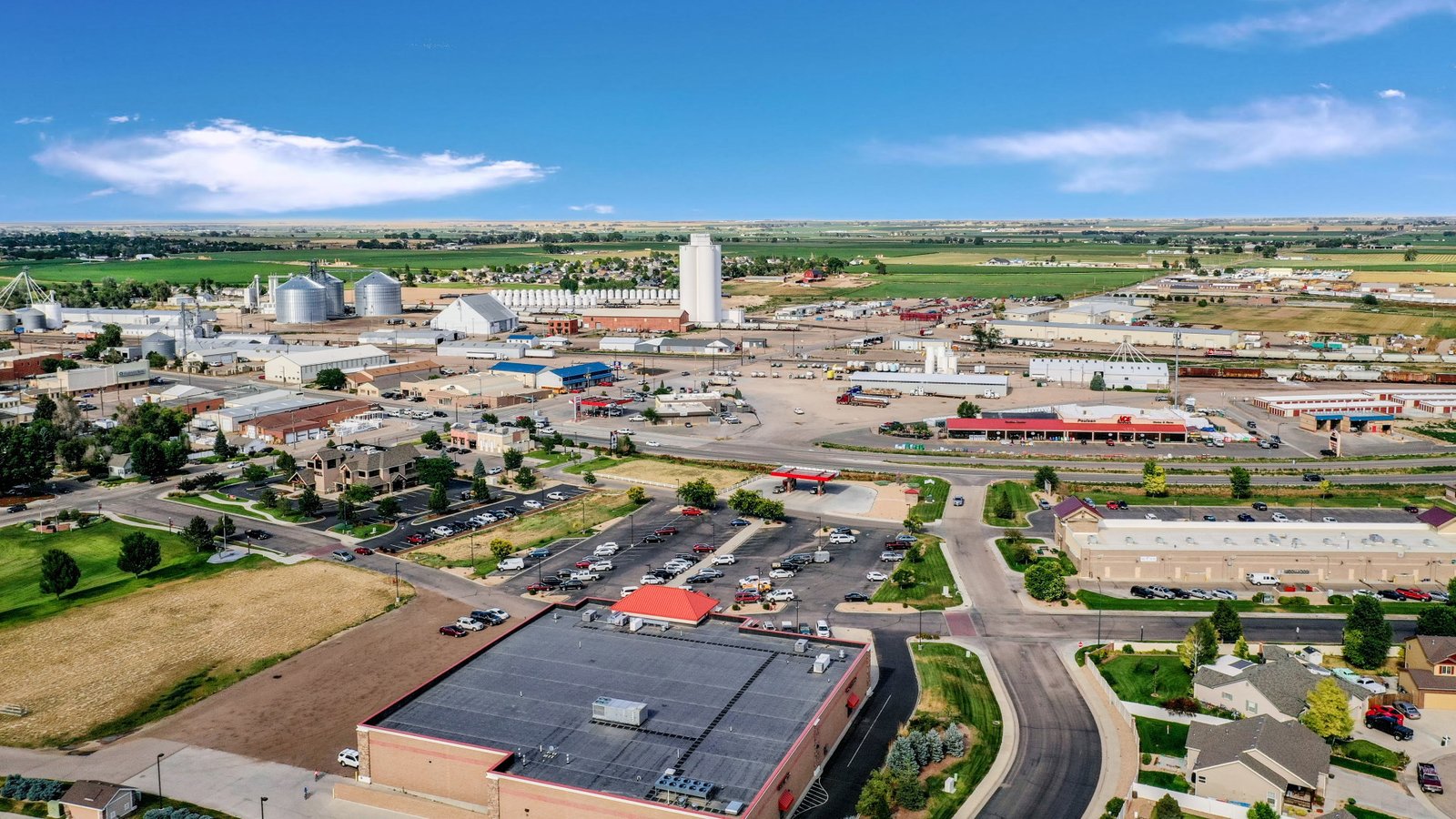
Eaton lies on the railroad's mainline running north from Denver and along US 85, about seven miles north of Greeley. US 85 meets State Highway 392 in Lucerne, passes through Eaton and meets State Highway 14 in Ault. The railroad's own description adds that the Denver metro area is within an hour's drive and Denver International Airport within 50 miles. That combination of rail, highway and reasonable distance to a large market is what draws industrial users to a town of this size.
We treat these sites as logistics problems first and construction problems second, since the layout of tracks, trucks and storage determines most of what the building has to do.
A small town with a large rail asset
Eaton had 4,365 residents in 2010 and 5,802 in 2020, on about three square miles at 4,839 feet. Much of the farmland around it depends on irrigation systems engineered by the Eatons and others, so the surrounding economy is rooted in agriculture. Industrial users who come to a place like this are often looking for room and a rail connection that is hard to find closer to a major city.
The rail parks give Eaton an unusual position among Weld County towns. Larger parcels can be assembled for users that need unit train service, and smaller parcels, down to an acre, suit a business that simply wants a siding or a transload operation. Neighbors on US 85, such as Ault, offer highway access without the same rail infrastructure, and some owners compare the two before choosing.
Warehouses, transload yards and process buildings
The buildings that make sense beside a rail line are often warehouses, bulk storage, transload facilities and light manufacturing or processing. A warehouse that receives rail cars needs a different dock arrangement than one that receives trucks, with doors, canopies and floor loads set for the way freight is unloaded. We work with the owner and the railroad's requirements on clearances to establish the building footprint before the structure is designed.
Beyond the building, the yard is where rail users succeed or struggle. Track spacing, turning radii, drainage and lighting should be coordinated with the building location. Our distribution center construction approach starts with the flow of goods and works inward to the structure, so that the building supports the operation rather than constraining it.
Railroad coordination and local review
Working next to an active railroad involves requirements that do not appear in a normal building permit. The railroad reviews anything that touches its right of way, and it has standards for clearance, drainage and safety. We ask for those standards early and make them part of the design, instead of discovering them when the plans are nearly complete.
On the local side, Eaton is a town in Weld County, and the building official sets the code edition for projects within it. Unincorporated Weld County adopted the 2024 International Building Code effective June 15, 2026, with engineered foundations required for most new structures, and nearby parcels outside the town may fall under that rule. We confirm jurisdiction by parcel and plan for engineered concrete foundations on industrial sites in either case.
What changes the price of a rail-served site
The largest variables are rarely in the building. Track work, signaling or switch costs, grading for rail clearances, stormwater control and utility extensions can exceed the cost of the shell on some parcels. We ask the owner to separate what the railroad will provide from what the owner must build, then price each piece so the total is transparent.
Timing is a factor too. A rail connection requires design, approval and construction, and the work may have to be coordinated with the railroad's own schedule. We build the building on a schedule that does not wait for rail if the owner can operate by truck in the interim, and we leave room in the layout for the track to be added. For logistics and distribution clients, that flexibility can be the difference between opening on time and opening late.
Working along US 85 and the surrounding towns
Our project teams work across northern Weld County, and a project in Eaton often shares trades and materials with others in the area. We also build in Greeley, about seven miles south, which has its own airport and a larger commercial base, and in Windsor, where the Great Western Industrial Park offers another rail-served option.
Owners considering several towns benefit from a contractor who can price them side by side. We can compare land, utilities, rail access, road conditions and permitting in each, then explain why the numbers differ. Sometimes the answer is that a particular site is the right one even though it costs more to prepare, and sometimes it is not.
Plan the site with us
Tell us what you ship, how you ship it and how much room you need. We will start with the layout and the railroad and highway questions, then price the building.
Questions Owners Ask
Do we need rail service to make an Eaton site worthwhile?
Not always. Some users value the parcel size, the highway access and the proximity to Greeley more than the track. Others depend on rail and should plan for it from the start. We help owners estimate the cost of the connection and decide whether to build now with truck access or wait.
What should we know about the railroad's approval process?
The railroad has its own design review for new service, and its listing mentions approval of a 10 percent design as part of that process. That means the track layout must be taken to a preliminary level before approval. We help the owner coordinate the building design with the track concept so that neither one forces a rework of the other.
How small a parcel can work for an industrial user?
The rail parks list parcels divisible to a one-acre minimum, which suits small operations such as transload yards, equipment storage or a compact production building. The building footprint, truck turning and drainage will usually determine whether a particular acre is workable. We test the layout on the actual parcel before the owner commits.
Which building code applies in Eaton?
The town's building official decides for projects inside town limits. For unincorporated Weld County, the 2024 International Building Code took effect on June 15, 2026, with engineered foundations required for most new structures. We confirm jurisdiction and edition in writing at the start.
Can you build the warehouse and the yard together?
Yes, and it is usually best to do so. The site layout, drainage and pavement need to match the way trucks, forklifts and rail cars move, and a single contractor can coordinate them. Owners also avoid problems at the edges where separate contractors meet.