
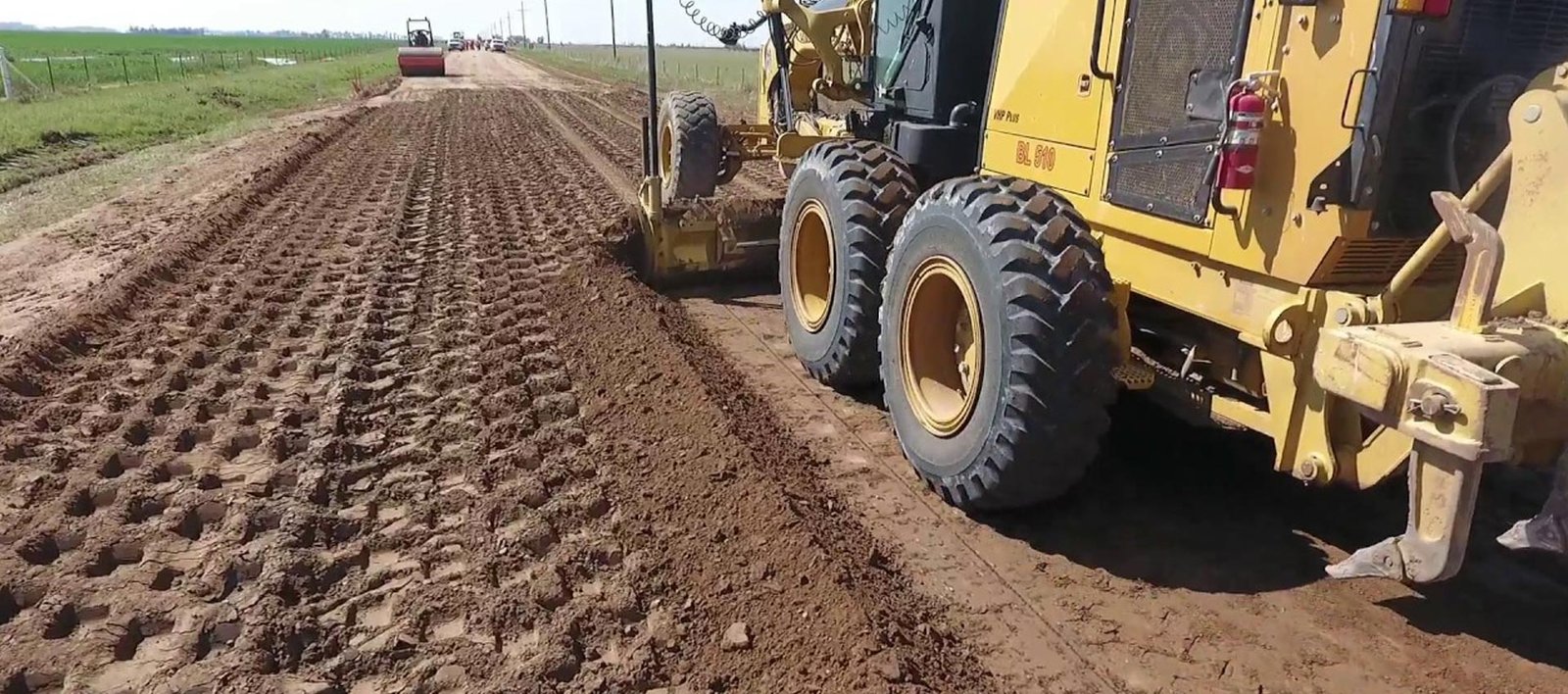
Mass Grading for Northern Colorado Development Sites
Before a footing is poured on a large parcel in northern Colorado, the ground has usually made most of the important decisions. Mass grading is where an owner learns whether the soil drains, where it holds, and how much of it has to leave the site or arrive by truck. The parcels that call for this work are getting larger. Great Western Industrial Park in Windsor is a 3,000-acre master-planned park offering sites from 5 to 200 acres, and The Ridge at Johnstown is a 265-acre mixed-use site with 90 acres of I-25 frontage. Work at that scale is a sequence of stripping, cutting, hauling, filling and proof-rolling decisions made over months, not a single pass of equipment.
We try to explain earthwork the way a careful owner would want it explained. Topsoil is stripped and stockpiled first, then the cut and fill balance is worked out against the civil drawings and the geotechnical report, and finally lifts are placed and tested to the compaction the structural engineer specified. When the balance does not close, we say so early, because importing or exporting material is one of the largest swing items in any earthwork number. Owners who bring us in during design can still adjust finished floor elevations to bring a site closer to balance, which is a far cheaper conversation than the one that happens after bids.
What the Earthwork Package Includes
On a typical commercial or industrial pad the package begins with clearing, demolition of any old farm structures and removal of irrigation features that cross the site. Stripping follows, with topsoil kept separate for landscape areas so it is not paid for twice. Bulk cut and fill come next, then fine grading of the building pad and the paving areas to the tolerances the slab and pavement designers need.
Around the grading itself sit the items that often get left out of early budgets: temporary erosion control, haul road maintenance, dust control, moisture conditioning of the fill and survey control that lets the engineer verify grades without stopping the work. Where a project also needs underground utilities, we sequence them with the pad so that trenches are not cut through freshly compacted lifts, and we coordinate with the site development and utilities trade partners on invert elevations before the first scraper moves.
Large Parcels, Rail and Interstate Frontage
Northern Colorado is a market of long, flat, rail-served tracts, and the grading reflects it. Union Pacific has a 160-acre pair of industrial rail parks at Eaton zoned I-2, with parcels divisible to a one acre minimum and Union Pacific approval of a ten percent design for new rail service. Windsor offers dual rail interchanges to Union Pacific and BNSF, with industrial buildings from 60,000 to 1,000,000 square feet planned across the park.
Rail-served industrial grading has its own logic. Track elevations, lead lengths and the slope of loading tracks drive the pad elevations, and the building sits where the rail and the truck court can both reach it. If you are weighing parcels in Eaton against those in Windsor, we can talk through how the site geometry will translate into earthwork quantities before you commit to either.
Sequencing the Cut, the Fill and the Test Results
Our approach starts with a quantity takeoff built from the actual topography rather than from the owner's rough pad count. We then plan haul routes and stockpile locations so that equipment is not crossing finished work. Fill is placed in controlled lifts, and the third-party testing agency is scheduled into the work rather than called after the fact. A failed test on Tuesday should cost an afternoon, not a week.
Weather matters here as it does anywhere on the Front Range. Spring moisture and winter frost can turn a prepared subgrade into a soft one, so we protect finished surfaces, close out sections as we go and keep drainage paths open. Where grading feeds directly into slab construction, we hand over the pad with a documented elevation survey so the concrete foundations crew starts from known numbers.
Where Earthwork Money Actually Goes
Import and export are the first driver. A parcel that is short of fill can add truck traffic that overshadows the rest of the earthwork scope, and a parcel with surplus can create a disposal cost that is easy to overlook. The second is soil condition: unsuitable material has to be removed or treated, and the cost of discovering that late is usually higher than the cost of investigating it early.
The third driver is how the site drains while it is being built. A site that holds water after rain stops productive work, and the cost shows up as standby time. Where a project must also handle runoff permanently, we coordinate with stormwater and drainage design so that detention areas are shaped in the same mobilization as the pad. Developers weighing an industrial speculative building against a build-to-suit often find that this early coordination is where their schedule is won.
Fitting Earthwork into the Season
Earthwork is one of the few trades that is genuinely season dependent. We aim to complete mass grading and underground work before the ground freezes so that foundations can start in the first good weather of the year. On parcels that arrive late in the fall, we plan for winter protection of subgrades or phase the work so that the building pad is finished first and the yard and paving areas wait.
For logistics and warehouse owners, a short grading schedule often decides whether a tenant takes occupancy in the planned quarter. If that sounds like your project, our work on warehouse buildings and with logistics and distribution clients informs how we set the milestones, and commercial real estate developers can tell us which pad dates their lenders care about most.
Talk Through the Ground Before You Commit
Send us the survey, the geotechnical report and the civil set, and we will give you a straight read on balance, haul and schedule before the number goes to your lender.
Questions Owners Ask
How early should we bring in a contractor for a large grading scope?
As early as the civil drawings are taking shape. A builder can compare balance options, flag where the geotechnical report leaves questions and price alternatives while elevations are still adjustable. Once the drawings are issued for permit, the same conversation usually means a change order.
Can you self-perform the testing program?
We schedule and coordinate independent third-party testing rather than testing our own work, since owners and lenders generally want an unaffiliated record. We build the testing into the lift schedule, review results the day they arrive and re-work any failed area before the next lift goes down.
What changes on a rail-served parcel?
The track geometry sets the pad elevation and often the building orientation, so grading follows the rail rather than the other way around. Rail design approvals are a separate track that must stay in step with the earthwork schedule. We keep a running list of which dates depend on railroad review so the grading plan does not outrun it.
Do you handle erosion control and stormwater compliance during grading?
Yes. Temporary controls are installed before disturbance, inspected after storms and adjusted as the grading changes the drainage patterns. We keep inspection logs available for the owner and for the permitting agency.
What should I know about weather risk before committing to a start date?
Plan a float in the schedule for wet spring weeks and for cold snaps that interrupt compaction. We would rather talk about a realistic window at the outset than promise a date the weather can overturn.