
Foothills Edge Construction in Bellvue and Pleasant Valley
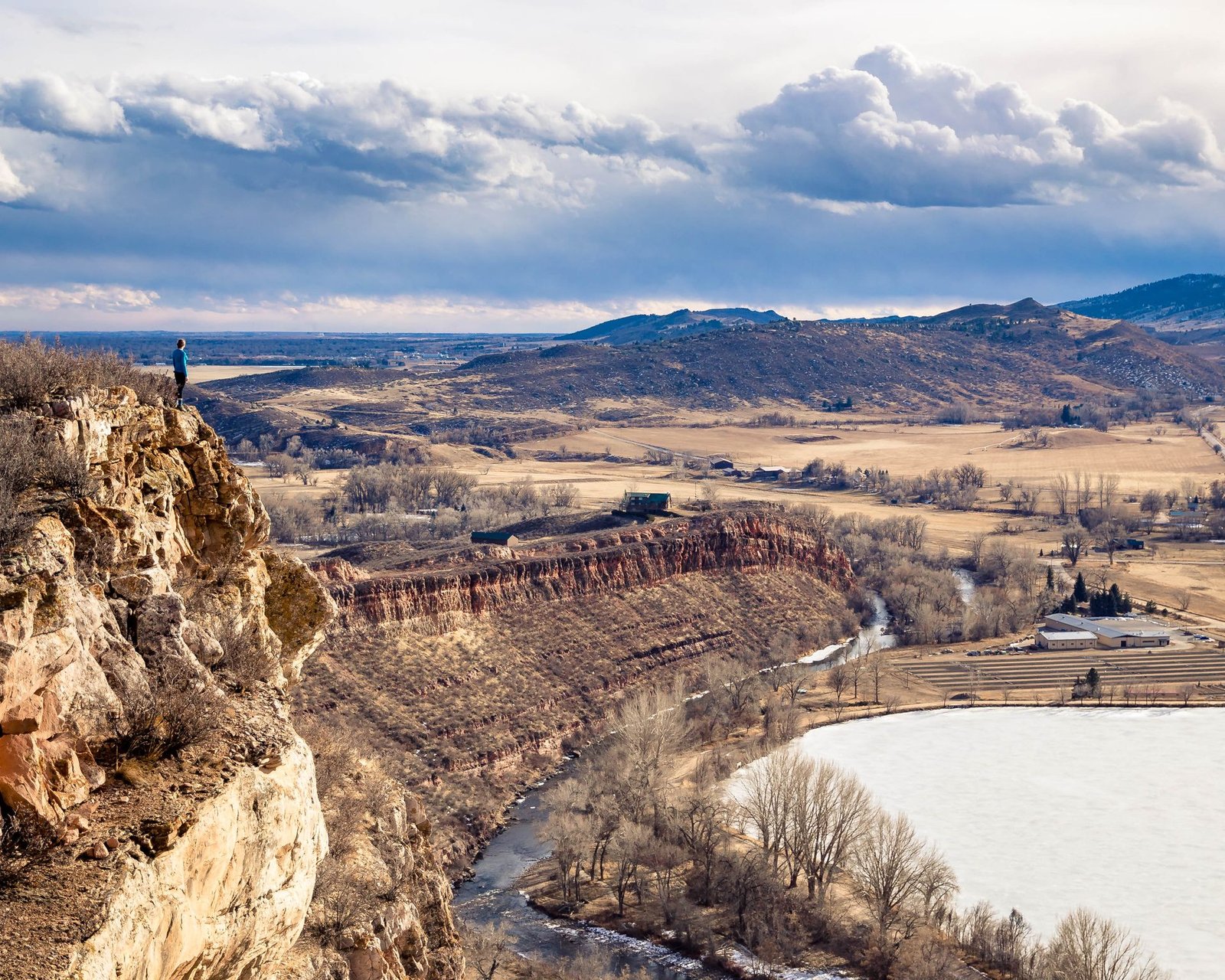
Some sites teach a builder patience, and the narrow valley at the mouth of Rist Canyon is one of them. Bellvue is an unincorporated community of Pleasant Valley, northwest of Fort Collins on the south side of the Cache la Poudre River at about 5,131 feet, and the southern part of that valley now lies under Horsetooth Reservoir. We build small commercial, community and service projects here where the land is tight, the access is limited and the neighbors care a great deal about what goes up.
The reservoir is a defining feature of the area. Horsetooth Reservoir holds 156,735 acre-feet behind four earthen dams, Horsetooth, Soldier Canyon, Dixon Canyon and Spring Canyon, completed in 1949 and seismically retrofitted between 2000 and 2004 as part of the Colorado-Big Thompson Project. Water is infrastructure here, and any construction that touches slopes, drainage or access near it deserves a measured approach. We start by understanding who owns and manages what around the site before we draw a line.
The projects we take on are modest in size but demanding in detail, and we find that owners appreciate a builder who is willing to say what the land will and will not allow.
Slow down at the beginning
The most useful thing we can do on a foothills-edge parcel is to spend time before the design is fixed. We walk the lot with the owner, note slopes, rock outcrops, drainage paths, mature trees and the places where the view will matter, and then we talk about where a building can sit with the least disturbance. The cheapest building site is often not the one that looks easiest on a plan.
We also take care in how the finished project will look. Neighbors in a valley like this notice scale, color, lighting and the way a driveway meets the road. We prepare simple elevations and material samples for conversations with neighbors and reviewers, and we listen to what they say. A building that fits the place passes through review more readily than one that arrives as a surprise.
Slopes, narrow roads and a river corridor
The valley is narrow, and roads that serve it can be steep or tight for large trucks. We survey the route before we commit to a delivery plan, noting turning radii, bridge limits and places where two vehicles cannot pass. Concrete trucks, for example, may need to arrive in smaller loads or at specific times so the road is not blocked.
The Cache la Poudre River drops about 6,155 feet over its course from Rocky Mountain National Park to its mouth, and was designated a National Wild and Scenic River on October 30, 1986 for 76 miles. That history makes the corridor a place where water quality and erosion control are watched closely. We install sediment controls before earthwork begins, protect the stream edge and keep fuel and concrete washout far from drainage paths. If a project draws from mass grading, we limit the area exposed at any time.
Weather, seasons and limited access
At more than 5,100 feet, winter arrives early, and snow can close or complicate the roads. We plan the sequence so that earthwork and foundations are completed in the drier months, the structure is enclosed before the heavy snow and interior work fills the colder weeks. This is simple in principle, but it needs the owner to commit to a start date that leaves enough time.
Because deliveries are slower here than in town, we favor strategies that reduce the number of trips: prefabricated wall panels, larger pours scheduled carefully and materials stored on site under cover. We also stage the work so that crews are not waiting for a single truck. A clear plan for each day helps the schedule hold when conditions turn.
Reviews that depend on the parcel
Bellvue is unincorporated, which usually places building and land use review with Larimer County, but we confirm the reviewing office parcel by parcel. The county's adopted code editions could not be verified from an official page during our research, so we ask for them in writing rather than assuming. Where a parcel borders the river, a reservoir or an irrigation facility, additional agencies may have a say.
We bring a simple approach to early meetings with reviewers: a clear site plan, a description of the use, a grading and drainage concept and a list of questions. Doing this before final design avoids redrawing. We also design foundations for the soil conditions actually found, with a geotechnical report that considers slope stability and groundwater, since both can differ a great deal across a small parcel.
Renovation, reuse and public projects
Not every project here is new construction. Older buildings in valley communities often need careful repair, and our renovation and adaptive reuse work helps owners keep what is worth keeping. We look for structural problems, moisture damage and energy performance first, then match the scope to the owner's budget and goals.
Public and quasi-public owners also have needs in an area with so much water infrastructure. Government and public sector clients often need access roads, small buildings and equipment enclosures that work with the landscape. Neighboring places such as Laporte face similar river-corridor and access questions, and the CSU Foothills Campus is another place where slopes, access and quiet neighbors set the terms.
Walk the site with us
Tell us where the parcel is and what you would like to build there. We will visit, look at access and drainage and give you an honest first read.
Questions Owners Ask
Can a delivery truck reach a site up a narrow valley road?
Often, but we check before we promise anything. We drive the route, measure turns and bridges and speak with neighbors if road sharing is needed. Where full-size trucks cannot manage, we use smaller loads, stage materials near the entrance or find another method that fits.
How do you protect the river and reservoir edge during construction?
We install erosion and sediment controls before any earthwork, keep stockpiles away from drainage paths and manage concrete washout in lined areas. The river corridor is a protected resource, with a National Wild and Scenic designation covering 76 miles, and our superintendent inspects controls after every storm.
Which agency will review our project?
Most likely Larimer County, because Bellvue is unincorporated, but it depends on the parcel and the use. Reservoir and irrigation interests can also be involved. We confirm the list at the start and write the review time into the schedule.
Does the reservoir affect what we can build nearby?
It can, through setbacks, drainage and access requirements, and through the attention that owners and managers of the water system pay to nearby work. We ask the relevant owners early and avoid assumptions. In practice, a respectful, well-documented proposal tends to move more easily.
Will winter shut the job down?
Not entirely, but it changes the plan. We aim to finish earthwork and foundations before the heavy snow, enclose the building and then work indoors. If the start date falls late in the year, we price winter protection and heat so the owner knows the cost in advance.