
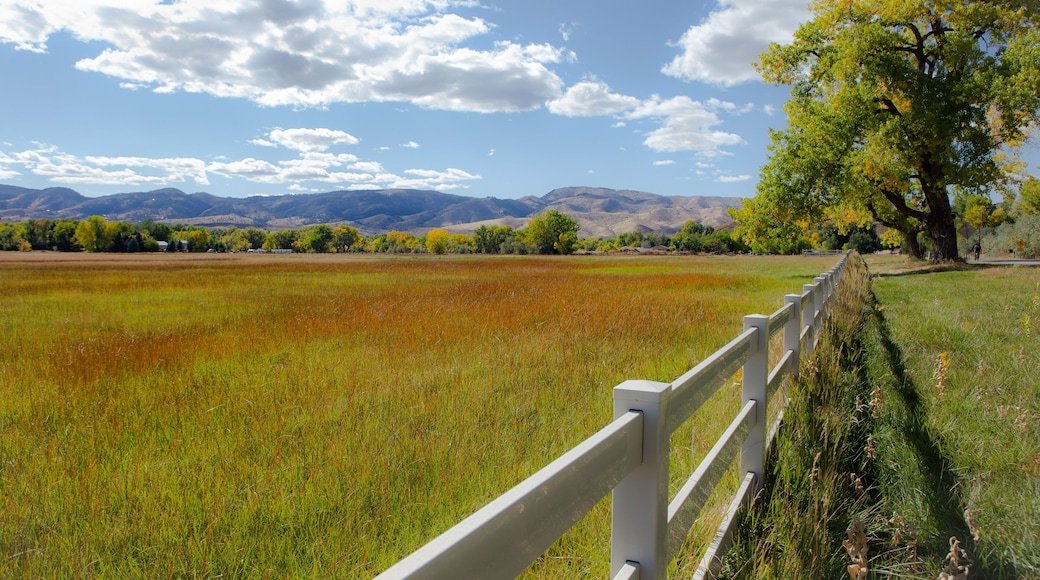
Commercial Construction in Laporte Along the Poudre River
Building next to a river that has already shown what it can do calls for a contractor who reads the water before the plans. Laporte is an unincorporated community on the Cache la Poudre River where it leaves the foothills northwest of Fort Collins, and an 1864 flood destroyed Camp Collins at La Porte. The river continues to flood periodically. We build small commercial and service buildings here with finished floor elevations, drainage and access set deliberately, and with the floodplain question settled before the owner has spent money on design.
The location is easy to describe: about six miles northwest of Fort Collins, with US 287 along the northern edge of the community and State Highway 14 listed as a major highway nearby. Laporte sits at 5,109 feet on a little over six square miles and had 2,409 residents in the 2020 census, a slight decline from 2,450 in 2010. This is not a market of large speculative buildings. It is a place for owner-operated businesses, contractor yards, small offices and community uses.
Our work here usually begins with a site walk, a floodplain check and a conversation with the county about what it will need to see. Owners who compare Laporte with Bellvue or with Wellington along I-25 are usually weighing river-corridor risk against highway access, and we help them put numbers on both.
Reading the river before drawing the building
The Cache la Poudre River is 126 miles long, rising in Rocky Mountain National Park, passing through Poudre Canyon and Fort Collins, and joining the South Platte River about five miles east of Greeley. At Laporte it has just left the foothills, which means a parcel here can sit close to a river that carries mountain runoff. We look at the floodplain map first, then at the actual ground, and we ask the owner what they remember of past high water.
If any portion of the parcel is in a mapped floodplain, building rules typically require special elevations or flood-resistant construction. Those requirements add cost but also protect the investment. Drainage is part of the same conversation, and our stormwater and drainage work is priced with the building. We price the options clearly, such as raising the pad, locating the building on the high part of the lot or designing a lower-value structure for the flood-prone area, so the owner can compare them.
County review and what we can confirm
Laporte is unincorporated, so Larimer County is the likely reviewing authority for building permits, floodplain and access. We could not verify the county's adopted code editions from an official page, so we do not assume them, and we ask the county for the current edition in writing. Our permitting and entitlements support tracks that review alongside the design. Colorado does not have one statewide commercial building code, and the edition varies by jurisdiction.
State energy law also applies. Colorado HB22-1362 requires any county or municipality that updates a building code on or after July 1, 2023 to adopt an energy code at least as demanding as the 2021 IECC, with the state model low energy and carbon code becoming the benchmark from July 1, 2026. A small building still needs a thoughtful envelope, and we run the energy path early so the design team does not discover it late. Access from US 287 or a county road may also need approval.
Small commercial, service and yard buildings
The buildings that make sense in Laporte are usually modest: a shop with an office, a small retail or service building, a storage structure or a municipal-scale utility building. We build them in steel, wood or masonry depending on the use, and we are honest with owners about where simple is better. A well-sited, well-drained building with good detailing outlasts a more elaborate one built on a poor site.
Many of our clients here are contractors and trades who need a yard and a shop. They care about truck access, secure storage and a slab that can take heavy equipment. We design around the vehicles they actually use, check turning paths on the site plan and make sure the entrance from the highway is safe and approved. For owners with several uses on one parcel, the sequence of building and site work matters, and we lay it out in phases.
Working near water, traffic and the highway edge
River-adjacent sites bring particular hazards. Excavations can fill with groundwater, banks can soften after rain and heavy equipment needs stable ground. We plan dewatering, shoring and temporary access before excavation starts, and we watch the forecast with unusual care when work is close to the channel.
US 287 carries real traffic, and entering or leaving a work site on it requires a traffic control plan and, in many cases, approval. We stage equipment away from the highway edge, use flaggers and signage where required and keep deliveries on a predictable schedule. Crews on our sites are briefed on the site's hazards each morning, since conditions can change overnight when a river or a ditch is involved.
What drives cost on a river-corridor site
On a site like this, the building itself is often a smaller share of the cost than the preparation. Fill to raise a pad, drainage to move water around it, an engineered foundation if soils are soft and a driveway that meets county standards are all common items. We tell owners about them early and put numbers on each, so that nothing sits in the budget as a vague allowance.
Utilities can be a surprise as well. A parcel outside a municipal system may need a well, a septic system or a longer extension than expected. Property managers who hold small commercial parcels often ask us to review these costs before they set rents. Our site development and utilities estimators price those extensions with the building. A short feasibility study at the start has saved more than one owner from a poor purchase.
Check the parcel with us
Send us the address and the use you have in mind. We will look at the floodplain, access and county requirements and tell you what the site will ask of the project.
Questions Owners Ask
How do we find out whether our parcel is in the floodplain?
Start with the floodplain maps maintained by the county and the federal flood program, and then confirm with a survey that shows the building site and its elevation. We help owners read the map and speak with the county floodplain staff. If part of the parcel is mapped, we plan the building around the safer area and price any required elevation or protection.
Which building code applies in Laporte?
Because Laporte is unincorporated, Larimer County most likely reviews permits, but we confirm the edition and any local amendments in writing before we price. The county's adopted editions could not be verified from an official page, so we avoid assuming them. State energy rules under HB22-1362 will affect the design either way.
Is highway access a problem on US 287?
It can be. Entrances onto state or major highways need approval, and the approval may require turn lanes, sight distance and drainage that add cost. We ask about access at the beginning and look for options such as shared drives or access from a lower-volume road.
Can you build a yard and shop for a contractor?
Yes, and we do it with the owner's vehicles and equipment in mind. We look at slab thickness, door height, security and drainage, and we place the building where trucks can turn without leaving the yard. A good yard is as important as a good shop.
Does the river affect construction schedules?
Sometimes. Spring runoff and heavy rain can raise groundwater and interrupt excavation. We schedule foundation work in the drier months when we can and keep pumps and shoring ready for the rest.