
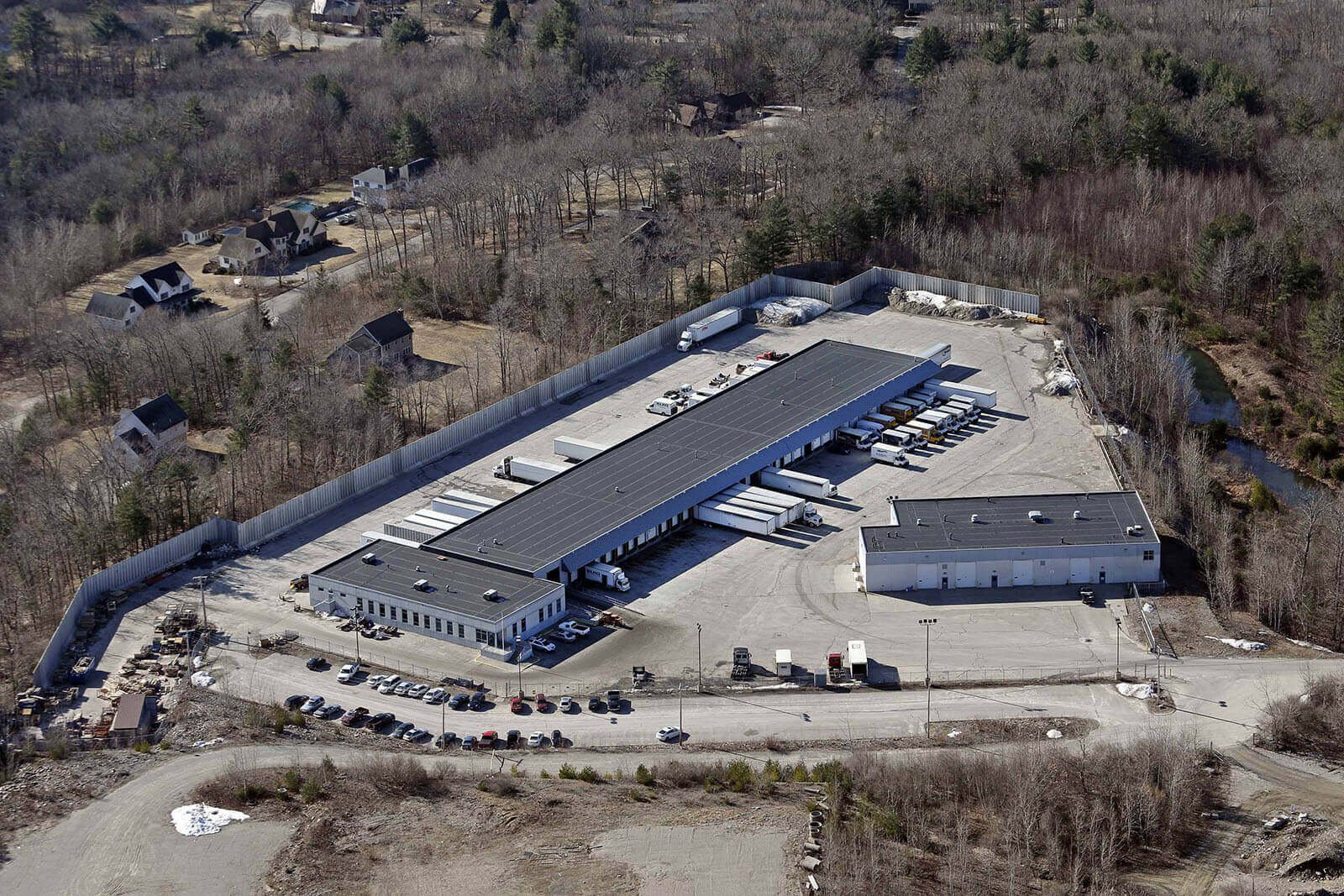
Truck Terminal and Cross-Dock Construction in Northern Colorado
A cross-dock lives or dies on geometry. Doors on both long sides, a narrow building, a deep truck court on each face and enough turning room for a 53 foot trailer to back in without blocking the yard: those requirements shape the whole property before anyone talks about finishes. The building is a long, shallow shed, and the concrete around it, the dock aprons, the drive lanes, the trailer parking, does as much work as the walls.
Northern Colorado suits this use because freight moves along a few well-defined lines. Interstate 25 runs along the east side of Fort Collins, US 85 carries traffic north and south through Weld County, and both Union Pacific and BNSF serve the region by rail. Terminal and cross-dock operators look for sites where a driver can get from the highway to a dock door without crossing a residential street, and where neighbors, a jurisdiction and a utility provider are ready to say yes.
We build these facilities for owners who understand how many trailers an hour they expect to handle. Some operators pair the dock with refrigerated space, others with parcel fulfillment, and each pairing changes the floor and the power. The most useful early conversation is about door count, trailer positions, truck turning paths and the pavement section, since those choices set the budget more than any single architectural decision.
Doors, Courts and the Turning Path
The building footprint is usually set by the door count. A common pattern is a long rectangle with dock doors facing both sides, a lower-level pit or an at-grade door at each end for oversize freight, and an office wing at a corner where it does not interrupt the flow. We lay out truck courts with the swept path of a full trailer in mind, then test the layout against fire access, stormwater detention and landscaping requirements before the owner commits to land.
Pavement is the most underrated part of the project. Trailer landing gear and loaded axles punish asphalt, so dock aprons and parking areas for trailers are often concrete, with reinforcement, dowelled joints and a subgrade that does not move when spring thaw arrives. Our truck court and dock apron work starts with the soil report and ends with a joint layout that suits the trailer pattern, not a generic parking-lot section. We also coordinate employee and visitor parking so that cars and trucks do not cross paths.
Corridors Where Terminals Make Sense
The strongest sites sit on a freight spine. Union Pacific's Eaton Industrial Rail Parks total 160 acres zoned I-2, on the line between the Front Range and the north, and Eaton lies along US 85 about 7 miles north of Greeley. For a carrier that interchanges with rail or wants a quiet, large site, Eaton offers parcels divisible to a 1 acre minimum.
At Evans, US 85 meets US 34 in a large interchange with left exits and loop ramps, and the primary commercial areas lie along US 85 just south of that junction. State Highway 14 reaches US 85 at Ault, where a Union Pacific line runs parallel to the highway. East of Fort Collins, the I-25 and Mulberry interchange is the subject of a CDOT improvement project covering mileposts 269 to 271, which matters because a terminal planned near it needs to understand how the ramps and frontage roads may change.
Building the Dock Wall and the Slab
The dock wall is the most expensive linear foot of the building. It carries door openings, levelers set in pits, bumpers, seals, lighting, and often a canopy, and it has to hold up to years of trailers backing into it. Whether the building is tilt-wall or a metal frame, we detail the door headers, the bumper blocks and the floor-to-pit transitions with the equipment supplier before pricing, because a leveler pit that is a few inches off creates a costly field fix.
The slab inside a cross-dock sees constant forklift traffic and, at times, loaded pallet jacks turning on a point. We design the floor for that traffic and talk through flatness, joint spacing and curing with the owner. Centerra Industrial buildings in Loveland are described with dock-high loading, concrete construction and ESFR sprinklers, a combination worth studying for any dock-heavy building, and the Loveland distribution centers are a useful comparison for a terminal that sorts freight rather than stores it.
Sequencing Around Freight Season
Terminal operators often need their building ready before a peak period, which makes the schedule unforgiving. We build backward from the date the first trailer needs to back in: pavement and dock aprons must be cured and striped, door equipment installed, the sprinkler system accepted and the electrical service energized. Concrete placement in a Front Range winter takes planning, so we set dates for the major pours when ground conditions allow, and we protect the slab and apron when they do not.
Long lead items such as dock levelers, overhead doors, transformers and lighting can set the finish date as surely as the weather. Our long lead procurement process puts these orders ahead of final drawing approval where the owner is willing to accept that risk, and we track fabrication dates on a shared schedule. When the owner wants to start operating before everything is finished, we phase doors and yard areas so the first section can open while crews work on the rest.
Keeping Trucks and Crews Apart
A terminal construction site gets crowded with concrete trucks, deliveries, cranes and, at the end of the project, the first tenant's drivers. We separate construction traffic from visitor traffic, mark pedestrian routes, assign spotters at the entry and keep the dock area controlled until equipment is tested. Open pits and leveler wells are covered or guarded because they are exactly the kind of hazard that a busy site forgets.
Fire protection is another area where we do not improvise. Large buildings with stored freight call for the sprinkler design the insurer and jurisdiction expect, and we coordinate fire lanes, hydrants and access gates so that a fire truck can reach every side of the building. This is also the stage where logistics operators tell us how their own safety programs will meet ours, and we are glad to align with them.
Bring Us Your Truck Count and Door Plan
Share the number of doors, the trailer positions you need and the corridor you want to serve, and we will test the site plan, the pavement design and the permitting path with you. A cross-dock gets cheaper to fix on paper than on concrete.
Questions Owners Ask
How many doors should a cross-dock have?
That depends on the freight volume you expect and the dwell time of each trailer, so we begin with your throughput and work back to a door count, not the other way around. A building designed with room to add doors on one end is cheaper to expand later than one that has to be cut open. We show owners how each extra door changes the footprint, pavement, utilities and cost.
Should the trailer parking and dock apron be concrete or asphalt?
Dock aprons and heavy trailer parking are frequently concrete because landing gear and turning tires damage asphalt. Employee parking and lighter drive lanes can be asphalt to hold the budget. The soils and the traffic count decide the balance, and we price both options with the geotechnical engineer's recommended sections so you can see the trade.
Can a terminal be built on a rail-served parcel?
Yes, provided the rail provider approves the design for service. Union Pacific lists approval of a 10 percent design for new rail service at its Eaton industrial parks, so spur geometry should be settled early. We coordinate the building footprint, yard grading and any rail spur construction so the lines do not conflict.
How long does permitting take for a large paved site?
It depends on the jurisdiction, but stormwater, traffic and fire access reviews usually set the pace, not the building review. We submit the site package early, respond to comments quickly and keep the owner informed of what the review is likely to ask for. Fort Collins also reads the 2024 International Building Code with local amendments for submittals on or after April 1, 2026, so we use current code assumptions.