Demolition for Redevelopment in Fort Collins and the Northern Front Range
Taking a building down is mostly sorting. A commercial structure from 1984, like the one at Prospect East Business Park, or an office building from 1997 on Harmony Road, contains steel, concrete, masonry, glass, roofing, wiring, ductwork and sometimes materials that need special handling. The work is less about wrecking and more about deciding what goes where: what is reused, recycled, hauled away or treated.
We manage demolition as the first step of redevelopment, and we treat it with the seriousness it deserves. Done poorly, it damages neighbors, disrupts utilities and leaves a site with problems for the next builder. Done well, it hands a clean, graded and documented site to the next contractor, ready for design and construction.
What Demolition Includes
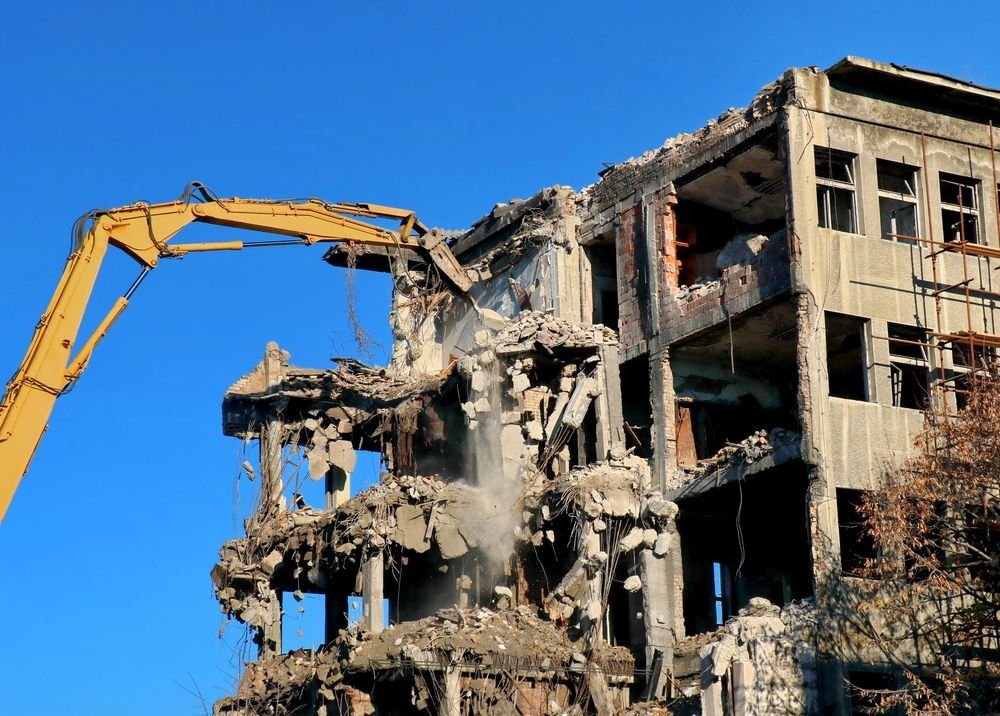
The scope begins with utility disconnects and a survey for hazardous materials such as asbestos, lead paint and universal waste. Abatement, if required, is completed by licensed specialists before demolition proceeds. We then protect adjacent properties, remove interior finishes if they are being salvaged, and demolish the structure by selective, mechanical or phased methods, depending on the site.
After the structure is down, the work continues. Foundations, slabs, footings and underground utilities are removed or capped, the site is backfilled and compacted where required, and erosion controls are installed. We deliver the site in the condition the next phase needs, which may mean rough grade, a clean building pad or an open excavation for new foundations. That handoff feeds directly into the mass grading and site trade partners.
Protecting Neighbors, Workers and the Public
Demolition is among the riskier activities in construction. Structures can behave unpredictably as members are removed, so we prepare an engineered demolition plan that sets the sequence, the bracing and the exclusion zones. Dust control, noise limits, vibration monitoring and traffic control protect those around the site.
Nearby operations deserve particular attention. A site beside an active hospital, school or manufacturing plant needs additional measures, and a project near an occupied building may require pre-demolition surveys of neighboring structures to document existing conditions. Owners in the manufacturing and public sectors often ask for those records, and we keep them with the project file.
Salvage, Recycling and Diversion
Owners increasingly ask us to document environmental performance, and we build that into our planning. Concrete and masonry can be crushed on site or hauled for reuse as fill and base, steel is sold as scrap, wood and metal are separated and certain fixtures can be salvaged. We track tonnage and diversion so that owners who need documentation for a green building program have it.
Salvage also has a cultural side. Historic buildings or buildings with notable materials may contain brick, timber or architectural elements that the owner wants to reuse in the new construction. We identify those items early, remove them carefully and store them. The design team can then integrate them, which pleases both the owner and the neighbors who remember the building.
What Moves a Demolition Budget
The main drivers are building size and construction type, the amount of hazardous material, site access, disposal distances, and the value of salvaged materials. Foundations and underground utilities are common unknowns; basements, old fuel tanks and abandoned lines can add cost if they are not documented. A thorough pre-demolition survey reduces the risk.
Owners with an eye on a larger redevelopment, such as when a major occupier sells a large campus and moves to smaller space, as Intel announced it would with its Fort Collins facility on Harmony Road in March 2024, should consider whether partial demolition or reuse might be better than full removal. Renovation and adaptive reuse can sometimes provide a faster, less costly route to a usable building than starting from a clear site.
Redevelopment Around the Historic Core and the Corridors
Demolition in Fort Collins often takes place in sensitive settings. The Old Town historic district includes 38 contributing buildings, and any demolition near it needs to respect design review and protect neighbors. Redevelopment along corridors and industrial areas such as Timberline and Prospect proceeds more simply but still requires careful coordination with utilities and the city.
Highway projects also create demolition work. CDOT's I-25 and Mulberry interchange improvements cover I-25 mileposts 269 to 271 and cite aging infrastructure and bridge replacement, and projects near the Mulberry interchange should anticipate that adjacent development may involve right-of-way coordination. We coordinate with public agencies on timing and traffic control when our work is adjacent to state roads.
Who Asks for Demolition
Demolition work comes from owners at several points in the property cycle. Commercial real estate developers clear obsolete buildings to make way for new ones, public agencies remove structures for road and utility projects, and manufacturers retire plant space or make room for new production lines.
Each of these owners brings different priorities. Developers focus on speed to a clean pad, agencies on public safety and process, and manufacturers on protecting operations that continue next door. Our manufacturing plant experience helps when demolition is internal to an operating facility, and we adapt our controls to the owner's rules for hot work, lockout and contractor safety.
Clear the Site Properly
Send the address, the building description and your redevelopment plans, and we will outline a demolition scope, a survey plan and a schedule.
Questions Owners Ask
How long does it take to demolish a commercial building?
A small building can be taken down in days or a few weeks, while larger structures with abatement take months. Utility disconnects and permits often take longer than the demolition itself. We provide a schedule that separates those stages.
Do we need an environmental survey before demolition?
Yes, a survey for asbestos and other regulated materials is required before demolition of most commercial buildings. If materials are found, they must be removed by licensed professionals first. We coordinate the survey and abatement so that demolition can begin as soon as the building is cleared.
Can you save part of a building?
Yes. Selective demolition can preserve a facade, a structural frame or a particular wing while removing the rest. It requires bracing and careful sequencing, and it costs more per square foot than full demolition, but it can save time and preserve character.
What condition will the site be left in?
It is left as specified in the contract: graded, backfilled and compacted for a new building, or at a rough grade with erosion controls. We document the final condition with survey and photographs, and we hand it directly to the next phase of work.
Who handles the permits?
We obtain the demolition permit and coordinate utility disconnects, hazardous material notifications and any state or local requirements. The owner supplies ownership documents and any historic review approvals.
How do you keep dust and noise down near neighbors?
We wet the structure during demolition, limit the hours of loud work and monitor dust at the property line. Haul routes are planned to avoid residential streets where possible, and trucks are covered. We tell neighbors in advance what is happening and give them a number to call.