
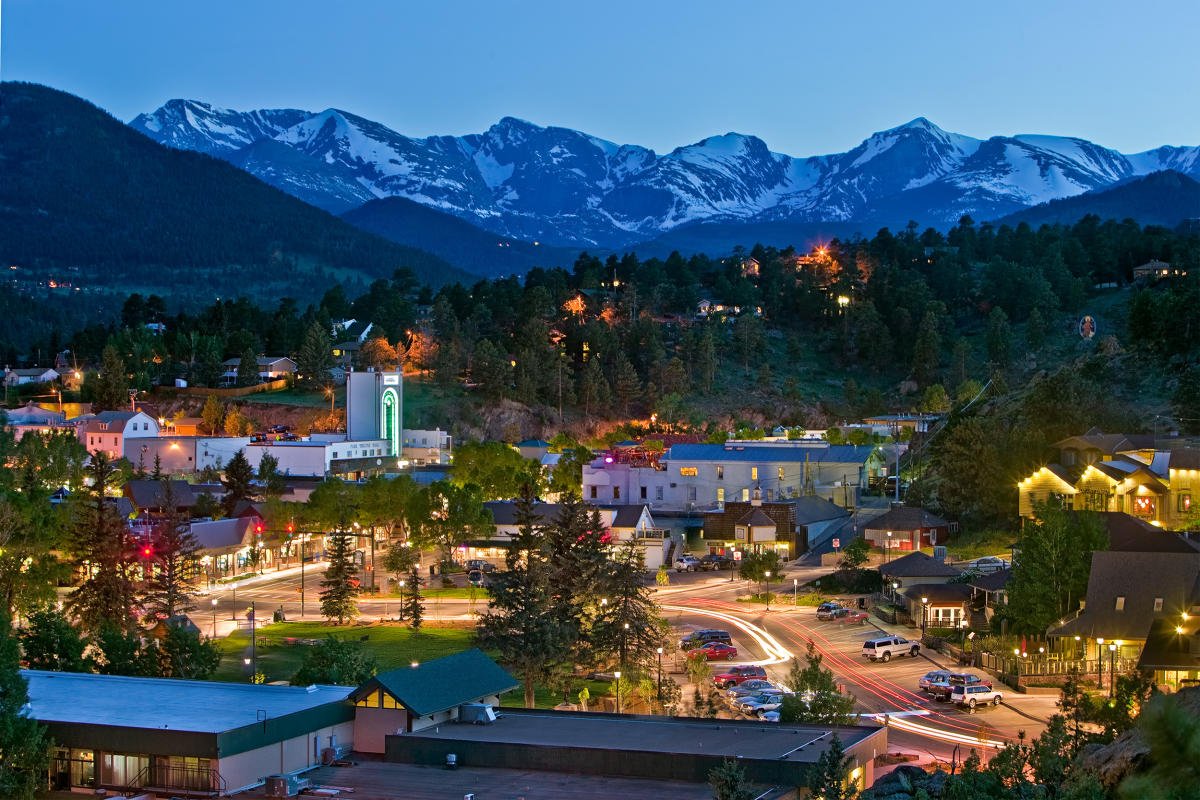
Mountain Commercial and Hospitality Construction in Estes Park
Getting materials up a canyon road, working in cold shoulder seasons and designing for a river that has flooded before are the three conditions that shape every Estes Park estimate we write. The town sits at 7,743 ft elevation on the Big Thompson River at the eastern entrance to Rocky Mountain National Park, with Roosevelt National Forest bordering it on the north, south and east. That setting is why owners want to build here, and it is also why the work does not resemble a project on the plains. Delivery windows, staging space and seasonal visitors all enter the plan.
Access is the first constraint. US 34 links Estes Park to Loveland through Big Thompson Canyon, US 36 links it to the Front Range plains, and State Highway 7 runs south along the Peak to Peak Scenic Byway. In September 2013, Highway 34 in the canyon, the town's main route in and out, was washed away, sewers were strained, and officials asked visitors to leave. Any owner planning a building here should assume that deliveries can be delayed by weather or road work, and should ask a contractor how it would keep a project moving when the road is closed.
We build lodging, retail, restaurant, medical and small commercial space with those realities written into the schedule and the budget. We prefer to say clearly what a mountain site costs and why, rather than hand an owner a flat-land estimate and an apology later.
What the river and the canyon teach
After the 2013 flood, Estes Park adopted a required freeboard standard of one foot, and a post-flood report noted that every building with structural damage, including one that was destroyed, was outside the mapped floodplain. The second point deserves attention from any owner: a parcel that is not on the map is not necessarily safe from water. We look at the drainage path across the property, the slope above it and the way a culvert or bridge nearby could fail, and then we set finished floor elevations and grading accordingly.
Our stormwater and drainage work on a hillside or river-adjacent lot includes swales, energy-dissipating outlets and retaining structures sized for storm flow. These are the elements owners tend to cut first and regret first, so we keep them visible in the budget.
Why a mountain price differs
Three things move cost: hauling, labor and weather. Materials come up the canyon in smaller loads or on tighter schedules, and trades travel farther, so the cost to mobilize a crew is higher. Concrete may have to travel a long way, which affects the pour sequence and the use of admixtures in cold weather. We discuss each of these with owners and show what is driven by the site and what is driven by the specification.
Seasonal demand is the other driver. Lodging and retail owners want to be open for the summer visitor season, and trades are most in demand then as well. Where we can, we recommend scheduling the heaviest exterior work in the shoulder months and finishing interiors during the winter, when the weather does not matter so much.
Planning around the season
A mountain building season is shorter than a valley one. Foundations and framing need above-freezing conditions or protected enclosures, roofing depends on wind and snow, and paving is limited by temperature. We build the schedule backward from the opening date, assume that weather will take some days and place contingency where it hurts least.
Early procurement matters here as well. Our long-lead procurement process locks in windows, roofing, mechanical equipment and finishes ahead of time so the building can be closed in before snow. For a boutique hotel or a restaurant, that can mean the difference between opening for the season and opening a year later.
Lodging, retail and the buildings that serve visitors
Visitor-oriented work is the largest group. Hotel and lodging construction at this elevation involves decisions about heat, snow storage and fire access that differ from a valley building, and we work with the design team on each. Smaller inns, cabins and event buildings follow similar patterns. Hospitality buildings also need careful acoustic and guest-comfort planning, since quiet is part of the product.
Year-round residents need clinics, shops and municipal buildings too. For those, we design for durability and low maintenance, with roofing and exterior finishes chosen for sun and snow rather than for the first season's appearance.
Permits in a town that has rebuilt before
We confirm the adopted code edition and local amendments with the town's building official at the start of every project rather than assume them. Structural design for snow, wind and seismic loads at this elevation is set by local criteria, and we ask the structural engineer to document the basis in the drawings so the reviewer sees it at once. Floodplain and freeboard requirements are reviewed alongside the building permit.
Character-driven design review may also apply, depending on the location. We bring photographs, material samples and elevation studies to review meetings, which tends to shorten them. For owners expanding or modernizing an older property, our renovation work includes surveys of the existing structure and a plan for keeping the property open through construction when that is possible.
Tell us about the lot and the season
If you are planning a project in Estes Park, share the site, the use and the date you want to open. We will visit, review access and drainage and give you a candid range and a schedule that accounts for the season. We also build in Loveland and Berthoud, if a lower-elevation site is worth comparing. Owners in hospitality often start the conversation a year ahead.
Questions Owners Ask
Can you deliver materials reliably to Estes Park?
We plan deliveries with the canyon in mind. That means staging materials ahead of critical activities, keeping a reserve of key items on site and having alternative routes and suppliers ready. We also tell owners honestly that a canyon closure can delay a day or a week, and we build float into the schedule.
How does the 2013 flood change what you build?
It raises the bar for drainage and for elevations. The town has a required freeboard of one foot, and a post-flood report found that damaged buildings were outside the mapped floodplain. We evaluate each site for water paths beyond the map, and we set the floor and grading accordingly.
Is it worth building a hotel or lodging property here?
That depends on your operating plan and financing, which we leave to you and your advisors. From the construction side, we can price the building, describe the schedule and flag the elements that carry the most risk, so the decision rests on reliable numbers.
When is the best time to start construction?
Often early in the shoulder season, so exterior work is complete before winter. If the opening date is fixed, we plan backward from it and decide which tasks can move indoors during cold weather.
Do you build smaller projects in town?
Yes. We build tenant improvements, small retail buildings and restaurant remodels. Smaller jobs need the same attention to access and staging, so we price them carefully.